DST sponsor profile
Cantor Fitzgerald
Firm facts, program history and offerings on Baker 1031. Alphabetical and unranked; not an endorsement.
Facts checked Jerry Baker
The short answer
Cantor Fitzgerald is a New York financial services firm whose real estate unit sponsors Delaware Statutory Trusts (DSTs) for 1031 exchange investors. The firm says it was formed in 1945, and SEC filings name Cantor Fitzgerald Investors, LLC as the sponsor of its DSTs.
Key facts
- Sponsoring entity
- Cantor Fitzgerald Investors, LLC
- Headquarters
- New York, NY
- Founded
- 1945
- Program types
- DST, 721 UPREIT, Non-traded REIT, Opportunity Zone fund
- Property types
- Multifamily, Net lease, Life science
- Managing broker-dealer
- Cantor Fitzgerald & Co. (CRD 134)
- SEC filings
- EDGAR (CIK 0001697509)
- Website
- cantor.com
From the sponsor's own website and public filings, checked November 1, 2026. Sources are listed in the full profile.
Cantor Fitzgerald offerings on Baker 1031
 OpenMultifamily
CF Fleetwood Multifamily DST
Cantor Fitzgerald · NY
- Y1 Yield
- 4.25%
- Minimum
- $100K
- LTV
- 50.3%
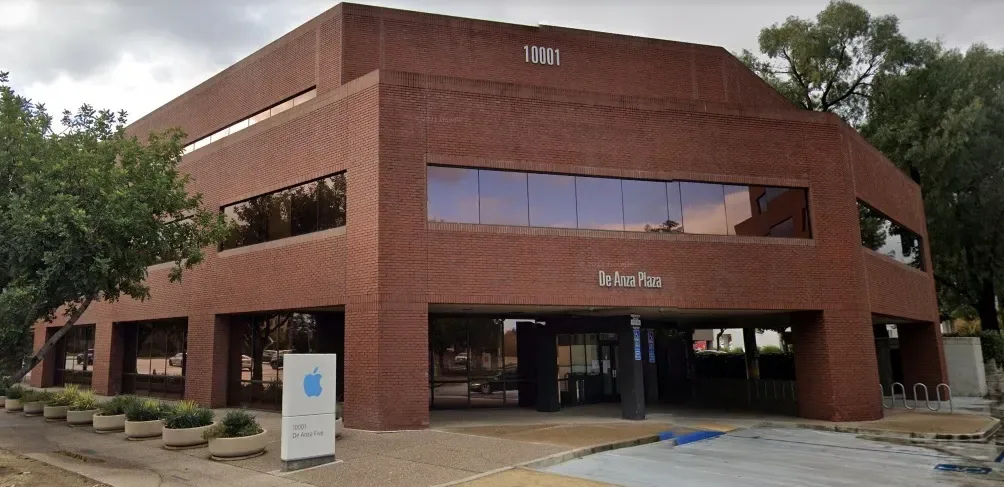 Under reviewOffice
CF Cupertino DST
Cantor Fitzgerald · CA
- Y1 Yield
- 5.00%
- Minimum
- $250K
- LTV
- All cash
 Under reviewMultifamily
CF Biscayne Multifamily DST
Cantor Fitzgerald · FL
- Y1 Yield
- 4.30%
- Minimum
- $250K
- LTV
- 52.3%
Past offerings
- CF Westshore Multifamily DST · 2026 Closed
About Cantor Fitzgerald
Cantor Fitzgerald began in 1945 as an investment bank and brokerage, according to its company history page. A May 2026 press release from the group says it is headquartered in New York and has more than 60 offices worldwide.
The DST line sits inside Cantor Fitzgerald Asset Management, often shortened to CFAM. Cantor's asset management page says the platform includes mutual funds, interval funds, non-traded REITs, Opportunity Zone funds, and 1031 and 721 exchange vehicles. The same page says Cantor has invested more than $2 billion since 2008 to build its commercial real estate businesses. That is the company's own figure, as shown on its site in November 2026, and Baker 1031 has not audited it.
Cantor calls these real estate businesses vertically integrated. In general, that term means one group of related companies fills several roles in a deal. When a sponsor's affiliates fill several roles, each role can carry its own fee, so check the compensation section of each offering.
Cantor Fitzgerald's DST and 1031 programs
A Delaware Statutory Trust is a trust that owns real estate. Many investors each buy a fractional interest in it. DST interests can qualify as replacement property in a 1031 exchange, which lets an investor defer tax on the gain from selling investment property. The DST guide explains the basics.
Cantor's DSTs are sold as private placements. A 2024 Form D, for CF Remy Multifamily DST, lists Cantor Fitzgerald Investors, LLC as the trust's sponsor. Cantor's DST filings use the address 110 East 59th Street in New York. A Form D is a short notice a company files with the SEC when it sells securities under an exemption from registration.
How far back the filings go. An EDGAR full-text search for "Cantor Fitzgerald Investors" returns Form D filings as early as February 2017. Those early filings covered a series called CF Net Lease Portfolio DST. One of them, for CF Net Lease Portfolio II DST, lists Cantor Fitzgerald, L.P. among the promoters.
Property types. The trust names in EDGAR show three main types:
- Multifamily. Most filings since 2018 are for trusts named "CF … Multifamily DST."
- Net lease. The 2017 CF Net Lease Portfolio series held net-leased commercial property.
- Life science. Filings from 2021 and 2022 cover trusts such as CF Valencia Life Sciences DST.
721 exchange path. Cantor's site lists 721 exchange vehicles alongside its 1031 and DST programs. In a 721 exchange, property moves into a REIT's operating partnership in return for partnership units. Whether a given DST has a 721 option, and whether it is optional or required, is set out in that offering's private placement memorandum (PPM). The 721 exchange guide covers what that trade-off means.
Non-traded REIT. Cantor Fitzgerald Income Trust, Inc. is described on Cantor's site as "a publicly registered, non-traded, monthly-valued perpetual real estate investment trust." It aims to hold stabilized commercial real estate and real estate debt. Cantor's page notes that its distributions are not guaranteed and its shares are illiquid.
Opportunity Zones. Cantor's site says Cantor Fitzgerald and Silverstein Properties launched an Opportunity Zone partnership in early 2019. EDGAR also shows Form D filings for "CSOZ" entities from 2021 to 2024. That partnership has its own page: Cantor Silverstein.
DST interests are illiquid. Distributions are not guaranteed, and investors can lose money. Most DST offerings are open only to accredited investors.
How to research Cantor Fitzgerald's offerings
Start with the SEC's EDGAR database. Search for "Cantor Fitzgerald Investors" to see the Form D for each trust, including its offering size and the firms paid to sell it. Cantor Fitzgerald & Co. is listed as the sales compensation recipient on these filings, and you can look up Cantor Fitzgerald & Co. (CRD 134) on FINRA BrokerCheck. Then read the PPM for the specific trust, and ask for full-cycle results on Cantor's past DSTs, the total fees, and the loan terms. The guides on how to check a DST sponsor and how to read a DST offering walk through each step.
Frequently asked questions
Is Cantor Fitzgerald a DST sponsor?
Yes. SEC Form D filings name Cantor Fitzgerald Investors, LLC as the sponsor of trusts such as the CF Multifamily DST series. Filings for its DSTs go back at least to February 2017.
Who owns Cantor Fitzgerald's DST business?
The DST sponsor is Cantor Fitzgerald Investors, LLC, part of the Cantor Fitzgerald group. Early filings list Cantor Fitzgerald, L.P. as a promoter. The program line sits within Cantor Fitzgerald Asset Management.
Where is Cantor Fitzgerald headquartered?
The group says it is headquartered in New York. Its DST filings use 110 East 59th Street, New York, NY 10022.
What kinds of property do Cantor Fitzgerald DSTs hold?
EDGAR filings show mostly multifamily trusts since 2018. Earlier trusts held net-leased commercial property, and some held life science buildings.
Does Cantor Fitzgerald offer 721 exchange programs?
Cantor's asset management page lists 721 exchange vehicles as part of its platform. Check each DST's PPM to see whether a 721 exit applies and on what terms.
Which broker-dealer is tied to Cantor Fitzgerald's DSTs?
Cantor Fitzgerald & Co., CRD 134, is the sales compensation recipient named on its DST Form D filings. Its record is on FINRA BrokerCheck.
Questions to ask about any DST sponsor
- Full-cycle results
- Ask for every program the sponsor has sold, including any that went back to a lender, and how investors came out of each one.
- Fees and loads
- Find the total load in the private placement memorandum (PPM): selling commissions, dealer-manager fees, acquisition and financing fees, and fees at sale.
- Debt
- Check the loan amount, rate, term and maturity date, and what happens if the loan can't be refinanced when it comes due.
- Reserves and capitalization
- See how much is held in reserve for repairs and vacancy, and whether the sponsor has the capital to support a property through a hard stretch.
- Conflicts of interest
- Read the PPM's conflicts section: affiliated managers, master lease arrangements, and any 721 exchange into the sponsor's own REIT.
- Regulatory record
- Look up the managing broker-dealer on FINRA BrokerCheck, and search the sponsor's filings on SEC EDGAR.
For a step-by-step version, see how to check a DST sponsor and how to evaluate a DST sponsor.
Sources
- Cantor Fitzgerald company history
- Cantor Fitzgerald Asset Management
- Cantor Fitzgerald real assets and investment management
- Business Wire: Cantor press release, May 20, 2026 (company boilerplate)
- SEC EDGAR full-text search: "Cantor Fitzgerald Investors" Form D filings
- SEC Form D: CF Net Lease Portfolio II DST (2017)
- SEC Form D: CF Remy Multifamily DST (2024)
- FINRA BrokerCheck: Cantor Fitzgerald & Co. (CRD 134)
This profile is general information about Cantor Fitzgerald, drawn from its own website and public filings. It is not an endorsement or recommendation of the sponsor or any of its offerings, and sponsors are listed alphabetically, not ranked. Baker 1031 may receive compensation from sponsors whose offerings it makes available. DST and other real estate securities are speculative and illiquid, distributions are not guaranteed, and you can lose your entire investment. Most are available only to accredited investors. This isn't tax or legal advice; talk with your CPA, attorney and qualified intermediary. Securities are offered through Aurora Securities, Inc., member FINRA/SIPC.