BT Athens Student Housing DST Overview
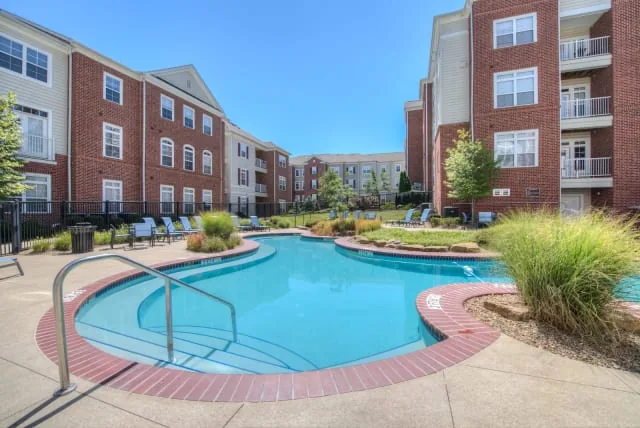
BT Athens Student Housing DST is a Regulation D, Rule 506(c) private placement sponsored by Baker Tilly that offers accredited investors fractional beneficial interests in a single, stabilized Class A student housing community. The Delaware Statutory Trust owns The Summit at Coates Run, a 239-unit, 856-bed garden-style community at 363 Richland Avenue in Athens, Ohio, located approximately one mile west of the main Ohio University campus (roughly a five-minute drive or twenty-minute walk). Built in 2009 and renovated in 2019, the property spans ten buildings on approximately 33.826 acres and totals 324,983 square feet, with units configured primarily as four-bedroom, individually leased residences. Units are fully furnished and include private bedrooms and bathrooms, in-unit washer/dryer, full kitchens, and high-speed internet, while the community offers a clubhouse, fitness center, swimming pool, study lounges, business center, grilling areas, and outdoor courtyards. The trust acquired the asset for a $62,500,000 purchase price against a $64,000,000 appraised value, capitalized with $37,725,000 of equity and $34,375,000 of fixed-rate debt for total offering proceeds of $72,100,000. The business plan is a straightforward buy-and-hold strategy centered on the durable, education-driven demand of the Ohio University submarket, where purpose-built student housing has historically shown very high occupancy. As a DST, the vehicle is structured to qualify as replacement property for investors completing a 1031 like-kind exchange, and it carries a full UPREIT (Section 721) option that could permit a future exit into a REIT's operating partnership. The minimum investment is $100,000. The offering suits accredited 1031 exchangers seeking passive, professionally managed real estate with monthly distributions, current income beginning at a 4.70% first-year yield, and the potential for modest income growth over a projected ten-year hold, without day-to-day management responsibility.
Highlights
The property is anchored to Ohio University, a major regional economic engine, and sits roughly one mile west of the main campus in Athens, Ohio. Total university enrollment reached 30,682 in fall 2025, up 3.6% year over year, and the surrounding student housing market posted 98.8% average twelve-month occupancy with 5.5% effective rent growth over the prior year. As of December 2025 the market held only 3,789 purpose-built beds alongside 6,497 on-campus beds, reflecting constrained purpose-built supply relative to demand. Athens County's economy is anchored by education and health services, which together account for over 40% of total payroll employment, lending the market stability beyond the university itself; the university's TechGROWTH Ohio program has generated roughly $1 billion in economic impact. Top area employers include Ohio University, OhioHealth O'Bleness Hospital, Athens City Schools, Rockwell Automation, and Stirling Ultracold. Population is projected to grow modestly at 0.30% annually across the MSA and 0.25% annually in the Ohio University submarket from 2024 to 2029. The site benefits from access along Richland Avenue, one of the closest major commercial corridors, with average access to public transportation and proximity to primary Athens demand drivers.
The Summit at Coates Run is a Class A, garden-style community built in 2009 and comprehensively renovated in 2019, comprising 239 units and 856 beds across ten low-rise buildings (a maximum of three floors) on approximately 33.826 acres, totaling 324,983 square feet at an average of about 1,360 square feet per unit. The rent roll is built primarily on four-bedroom, individually leased configurations, the by-the-bed leasing model favored in student housing, with an average monthly rent of $2,809 per unit. Every unit is fully furnished and delivers private bedrooms and bathrooms, in-unit washer/dryer, full kitchens, and high-speed internet, amenities that align with contemporary student-renter expectations and support premium pricing. Community amenities include a clubhouse, fitness center, swimming pool, study lounges, a business center, grilling areas, and landscaped outdoor courtyards. The asset was 92.98% occupied at the time of the offering, leaving measurable room to push toward the submarket's 98.8% average occupancy. Day-to-day operations are handled by Everest Campus Central, a student housing specialist that is an affiliate of the seller, providing operational continuity through the ownership transition.
The offering is capitalized conservatively for a student housing asset. The trust placed $34,375,000 of fixed-rate mortgage debt against $37,725,000 of equity, producing a stated loan-to-value of 47.68% on total capitalization of $72,100,000 (a $62,500,000 purchase price plus reserves and offering costs). The loan carries a 5.72% fixed interest rate through a ten-year term with Old National Bank and is interest-only for the full ten years, which maximizes distributable cash flow during the hold by deferring amortization. Projected first-year net operating income of $4,008,990 covers annual interest service of roughly $1.97 million by a healthy 2.04x debt-service coverage ratio, providing a meaningful cushion against income disruption. Fixed-rate financing insulates the trust from interest-rate volatility over the hold, and the modest leverage level reduces refinancing pressure relative to more highly geared deals. The offering also funds approximately $2,214,000 of reserves, about 5.87% of equity and 3.54% of the purchase price, to support operations and capital needs. Sponsor projections indicate breakeven thresholds of approximately 3.30% on a five-year basis and 1.65% on a ten-year hold (each assuming 4% disposition costs, no remaining reserves, and excluding distributions), underscoring the coverage embedded in the low-leverage structure.
The offering is sponsored by Baker Tilly, a firm founded in 1931 in Waterloo, Wisconsin, that has grown into the tenth-largest accounting, advisory, and financial services firm in the United States, with combined member-firm revenue exceeding $4.0 billion. The DST manager is led by the same experienced investment bankers and real estate finance specialists who advise the real estate clients of Baker Tilly US, bringing institutional underwriting discipline and capital-markets depth to the sponsorship of the trust. This heritage differentiates the offering from single-purpose syndicators and signals a sponsor with substantial organizational resources, professional infrastructure, and reputational stake. At the property level, management is handled by Everest Campus Central, a student housing operator and affiliate of the seller, providing specialized by-the-bed leasing expertise and continuity of on-site operations. The sponsor's economics show some alignment: it earns a 2.50% disposition fee but retains 0% of the property at exit, and the offering funds meaningful reserves. Investors should nonetheless weigh that the manager and property-manager relationships involve affiliated parties and that the sponsor earns acquisition, financing, and ongoing fees disclosed in the PPM.
BT Athens Student Housing DST is structured specifically to serve investors completing a 1031 like-kind exchange. Under established IRS guidance, a properly structured Delaware Statutory Trust interest is treated as a direct interest in real estate that qualifies as replacement property, allowing exchangers to defer capital gains and depreciation-recapture taxes on the sale of relinquished real estate while acquiring a fractional interest in institutional-quality real estate. The offering accepts a minimum investment of $100,000, giving exchangers flexibility to precisely match equity to their exchange requirements and to diversify across multiple replacement properties. Investors receive passive monthly distributions and their pro-rata share of depreciation, which may shelter a portion of the income for tax purposes, without assuming active management responsibilities. Importantly, the offering carries a full UPREIT (Section 721) exchange option, which could allow the trust's property to be contributed to a real estate investment trust's operating partnership in exchange for operating-partnership units at a future date, providing a potential path to greater diversification and estate-planning flexibility while continuing to defer taxable gain. The availability and consequences of 1031 and 721 treatment depend on each investor's circumstances and should be confirmed with qualified tax and legal advisors.
Analysis of BT Athens Student Housing DST
Insights
BT Athens Student Housing DST is a fixed-coupon tax-deferral vehicle, not the appreciation play its lease-up narrative implies — a bond-like income sleeve for an exchanger who intends never to sell. The financing carries it: 47.68% LTV and a 5.72% coupon fixed for the full ten-year interest-only term, removing rate and refinancing risk. That buys category-typical income and little more: the 4.70% first-year yield barely moves, peaking near 5.21%, so it only Meets Average on current income against the benchmark while peak yield and growth both screen Below Average. For that you pay a heavy 19.58% load on equity (11.82% of purchase), mostly selling commissions and sponsor fees. One correction: year-one distributions are covered by NOI, not a return of capital, at a 1.15x payout ratio.
The buried fact is the exit. The offering calls the Section 721 UPREIT an "option" and "potential path," but here it is the mandatory exit route — investors most likely end up holding a REIT's operating-partnership units at year ten, not cash. The outcome then hinges less on operations than on the value captured at that contribution — the REIT's exchange terms, not a clean sale of Coates Run. Near term, watch occupancy, 92.98% at offering versus a 98.8% submarket average, and don't wave off the enrollment cliff the PPM concedes or the $34,375,000 interest-only balloon at maturity. Baker Tilly lends polish, but the row shows no full-cycle DST track record to price it against.
Own it if you are an exchanger placing equity at the $100,000 minimum who prizes deferral, capital preservation and passive income over total return, and actually wants the mandatory 721 — it fits a "never sell," step-up-at-death estate plan. Pass if you want income growth, a defined cash exit at year ten, or won't underwrite a single Ohio University submarket into a declining college-age population.
Advantages
Several attributes distinguish this offering. First, current income is attractive and appears well-supported: the trust projects a 4.70% first-year yield rising to a 4.96% average and a high of 5.21% by year ten, with year-one net operating income of $4,008,990 covering debt service at a strong 2.04x DSCR, meaning first-year distributions are supported by property cash flow rather than by return of capital or reserves. Second, leverage is conservative at a 47.68% loan-to-value on total capitalization, and the debt is fixed at 5.72% for a full ten-year term, eliminating floating-rate and near-term refinancing exposure during the hold. Third, the ten-year interest-only structure maximizes distributable cash flow by deferring amortization. Fourth, the underlying real estate is Class A, built in 2009 and renovated in 2019, fully furnished with modern unit and community amenities, and located roughly one mile from Ohio University in a submarket that posted 98.8% average occupancy and 5.5% effective rent growth over the trailing year. Fifth, current occupancy of 92.98% sits below the submarket average, offering realistic lease-up upside toward stabilized levels. Sixth, sponsorship by Baker Tilly, the tenth-largest US accounting and advisory firm, with a DST manager led by seasoned real estate finance specialists, provides institutional underwriting depth, and the sponsor retains 0% of the asset at disposition. Seventh, the deal funds approximately $2,214,000 of reserves (about 5.87% of equity) as an operational cushion. Finally, the DST structure delivers turnkey 1031 eligibility at a $100,000 minimum, passive monthly income, potential depreciation benefits, and a full UPREIT (Section 721) option for future flexibility.
Concerns
The offering data and PPM disclose meaningful risks. Student housing is operationally intensive: the property must be re-leased for every academic calendar year, and the PPM specifically flags lease-up risk during the summer months, when turnover concentrates and vacancy can spike. Competitive supply is a stated concern, as there are many student housing options in the immediate area and the sponsor identifies a competitive supply of purpose-built product within close proximity of the subject as a weakness and threat. Longer term, the PPM notes that the projected trend for the U.S. college-age population is a decline (the demographic enrollment cliff), which could pressure student housing demand broadly over time. The projected income stream is essentially flat in the early years, with the yield growing only from 4.70% in year one to 4.94% in year five, so investors receive little income growth for the first half of the hold. The cost load is high: total load is 19.58% of equity (11.82% of purchase price), including selling commissions and due diligence of 7.00% of equity, a managing broker-dealer fee, organization and offering costs, and sponsor acquisition, financing, and other fees totaling roughly 7.01% of equity; this spread means the property must appreciate materially just to return original capital. As with all DSTs, investors hold no management control or voting rights and must rely entirely on the sponsor and the affiliated property manager, Everest Campus Central. The investment is illiquid, with no public market for interests and a projected ten-year hold. It is a single asset in a single submarket, so there is no diversification by property, tenant type, or geography. The loan is interest-only for its entire term, meaning the full $34,375,000 principal balance comes due at maturity and exposes the trust to refinancing or sale risk in an uncertain future interest-rate and cap-rate environment. Current occupancy of 92.98% is below stabilized assumptions, and projected returns depend on achieving and sustaining higher occupancy and rent growth. Finally, all projections are sponsor estimates subject to the extensive risk factors beginning on page 25 of the PPM.
BT Athens Student Housing DST — Complete Offering Data
Offering & Structure
Investment NameBT Athens Student Housing DST
SponsorBaker Tilly
StructureDelaware Statutory Trust (DST)
Offering Type506(c)
StatusUnder Review
Last Updated2026-06-27
Size & Availability
Total Offering$72,100,000
Equity$37,725,000
Debt$34,375,000
Available Equity$37,725,000 (100% of equity)
Minimum Investment$100,000
Total Load19.58%
Initial Reserves5.87%
Property
Property TypeStudent Housing
StrategyCore-Plus
LocationOH
Market TierTier 3
Income & Projections
Average Yield4.71%
Projected Yields (Y1–Y10)Y1 4.70% · Y2 4.72%
Tax-Adjusted Yield11.54%
Cap Rate Equivalent8.52%
Year 1 NOI$4,008,990
Y1 Payout Ratio1.15
Financing
In-Place LTV47.68% LTV
LenderOld National Bank
Loan TypeFixed
Interest Rate5.72% (Fixed)
Loan Term10 years
I/O Period10 years
AmortizationN/A (interest-only)
Y1 DSCR2.04x
Exit
Estimated Hold Period2 years
721 Exchange ExitMandatory
Benchmarks (vs sector median)
Avg. Income4.71% vs 5.12% market — Meets Average
Growth0.43% vs 23.72% market — Below Average
Peak4.72% vs 5.79% market — Below Average
Every data point Baker 1031 tracks for this offering, in one place. Figures are drawn from the offering’s private placement memorandum and sponsor materials unless noted, are summaries for convenience only, and are qualified in their entirety by the PPM. Tap the ⓘ icon next to any label for what it means and how it is calculated.