ExchangeRight Net-Leased All-Cash 19 DST Overview
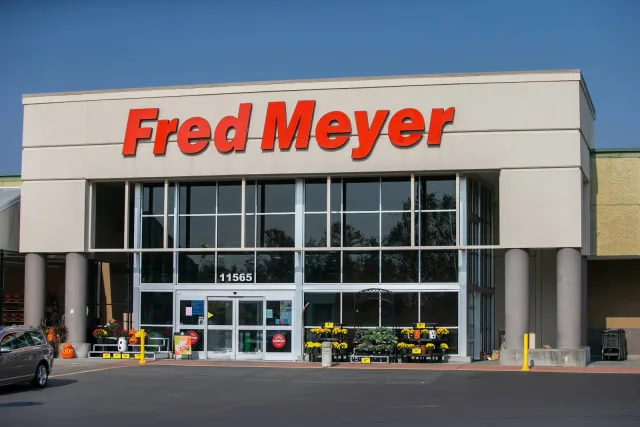
ExchangeRight Net-Leased All-Cash 19 DST is a debt-free, all-cash Delaware Statutory Trust offering sponsored by ExchangeRight Real Estate, LLC. The Trust, formed August 27, 2025, is offering 100 Class 1 beneficial interests at $269,500 per interest for a maximum equity offering of $26,950,000, with a $100,000 minimum purchase (each interest representing a 0.37106% beneficial ownership stake). Because the offering carries no mortgage debt, investors face no lender, no loan covenants, and no refinancing or balloon-maturity risk at the property level. The portfolio consists of three 100%-occupied, single-tenant, net-leased properties: a Fred Meyer (a wholly owned Kroger Co. subsidiary; Kroger is S&P investment-grade BBB) in Shelton, Washington; a Hobby Lobby in Scottsboro, Alabama; and a Verizon Wireless store in Roscoe, Illinois. The assets total roughly 122,000 square feet and are leased to national tenants operating in necessity-based, historically recession-resilient retail industries, with a weighted-average remaining lease term of 10.7 years. Individual leases run to November 2034 (Fred Meyer), December 2035 (Verizon), and December 2040 (Hobby Lobby). All three properties are covered by a single 20-year master lease (expiring February 28, 2046) to an ExchangeRight-affiliated master lessee whose rent obligations are guaranteed by the ExchangeRight Essential Income Operating Partnership. The master lessee bears responsibility for operating, maintaining, insuring, and re-leasing the properties, so the Trust holds a largely passive real estate position. The offering targets a 5.15% first-year cash flow from in-place lease revenue, distributed monthly, and is structured to qualify as replacement property for a Section 1031 tax-deferred exchange. It suits accredited investors seeking to defer capital-gains tax on a real estate sale, or seeking net-leased, income-oriented real estate on an all-cash basis, who can accept illiquidity, lack of control, and single-portfolio concentration in exchange for stable, tenant-backed income and a defined sponsor exit strategy.
Highlights
The portfolio is geographically diversified across three distinct U.S. markets in three states: Shelton, Washington (301 East Wallace-Kneeland Boulevard), a retail corridor serving the Olympic Peninsula region; Scottsboro, Alabama (481 Alex Garcia Street) in the Southeast; and Roscoe, Illinois (4601 East Rockton Road) in the greater Rockford area of the Upper Midwest. Rather than concentrating in a single metro, the sites are positioned in established, necessity-based retail locations serving their surrounding trade areas. Each property is a freestanding, single-tenant building leased to a national operator, and ExchangeRight's site-selection approach favors strong locations anchored by tenants in recession-resilient industries such as grocery, discount and craft retail, and wireless communications. This three-state footprint reduces exposure to any one local economy, employer, or regional downturn relative to a single-property DST.
All three properties are 100% occupied under net leases to nationally recognized tenants. The largest, at roughly 58.53% of portfolio income, is a Fred Meyer operated by Kroger Co. (2025 revenue of about $147.1 billion; S&P investment-grade BBB), a 68,459-square-foot store leased to November 30, 2034. The Hobby Lobby in Scottsboro (about 29.22% of income) spans 50,354 square feet with a lease to December 31, 2040; Hobby Lobby reported roughly $8.0 billion in 2025 revenue and ranks among Forbes' largest private companies. The Verizon Wireless store in Roscoe (about 12.26% of income) is a 3,336-square-foot location leased through December 31, 2035 and guaranteed by Cellular Sales of Knoxville, one of the largest Verizon retailers; Verizon Communications is rated investment-grade BBB+. The tenants operate in necessity-based, largely e-commerce-resistant categories, and day-to-day maintenance, repair, and insurance obligations sit with the master lessee rather than the Trust.
A defining feature of this offering is that it is entirely debt-free. The full $26,950,000 of uses is funded by owner equity, with no mortgage, no lender, and therefore no loan-to-value ratio, no debt covenants, and no refinancing or balloon-payment risk during the hold. This eliminates the single largest structural risk in most leveraged DSTs: a loan maturing into an unfavorable interest-rate or credit environment. The sources-and-uses schedule allocates approximately $24.0 million (89.06%) to total acquisition cost, $532,985 (1.98%) to the acquisition fee, and $398,135 (1.48%) to reserves for operations and asset management, with total selling commissions and offering expenses of $1,949,600, or 7.23% of the offering. An all-cash structure means distributions are not burdened by debt service, but it also means investors forgo the potential return amplification of positive leverage and accept a lower current yield than a comparable leveraged deal might target.
ExchangeRight Real Estate, LLC is a private real estate investment firm founded in 2012 and focused on the acquisition and management of single-tenant, net-leased retail nationwide. Its key principals, founders David Fisher, Joshua Ungerecht, and Warren Thomas, together with President and CFO David Van Steenis, bring backgrounds from KPMG, Wells Fargo, HSBC, and PricewaterhouseCoopers, and the principals have collectively been engaged in real estate for over 70 years. Affiliates of the Sponsor have acquired or placed under contract over $7.2 billion of assets, encompassing more than 1,400 properties totaling over 28 million square feet across 47 states. ExchangeRight operates a scalable DST and REIT platform (the ExchangeRight Essential Income REIT), and its disclosed prior programs include full-cycle net-leased funds that met or exceeded targeted returns; for example, Net-Leased Preferred Equity Fund 1 realized a 12.93% annualized return and a 1.28x investment multiple, and Fund 2 realized 10.11% and 1.24x. Past performance does not guarantee future results.
The Trust is structured so that beneficial interests qualify as like-kind replacement property for investors completing a Section 1031 tax-deferred exchange, allowing deferral of capital-gains and depreciation-recapture taxes on the relinquished property, while non-exchange investors may also participate on a cash basis. Ongoing depreciation may shelter a portion of the monthly income. The offering also carries a defined exit strategy built around ExchangeRight's REIT aggregation platform: the Sponsor targets acquisition of the DST interests by the ExchangeRight Essential Income REIT, giving investors the option to (1) complete another 1031 exchange, (2) participate in a tax-deferred cash-out financing targeting distribution of roughly 20% of investment value with the remainder rolled under Section 721, (3) exchange DST interests for REIT operating-partnership units under Section 721 for continued tax deferral, (4) cash out on a taxable basis, or (5) a combination. A Section 721 roll-up preserves deferral but ends the ability to complete future 1031 exchanges, and all exit options depend on the REIT's capital availability and are not guaranteed.
Analysis of ExchangeRight Net-Leased All-Cash 19 DST
Insights
In portfolio terms this is a bond-proxy for credit-tenant retail income: an unlevered, all-cash net-lease portfolio whose return is almost entirely coupon, with little capital-gain engine behind it. The all-cash structure is the real differentiator - with no debt, no LTV, no covenants and no balloon, the Trust sidesteps the refinancing risk that has punished leveraged net-lease DSTs in a higher-rate world. The price of that safety is yield: a targeted 5.15% first-year distribution that escalates only to about 5.49% by year ten, and no lift from positive leverage, so total return leans on the eventual sale or roll-up price, not debt paydown. Against the net-lease benchmark the pricing screens as fair, not cheap - first-year income meets the ~5.11% market average and the ~5.49% peak meets the ~5.34% average, but income growth screens below average, reflecting the thin ~0.34-point escalation across the hold. Entry cost is on the heavy side: an all-in load near 9.46% (7.23% of it selling commissions and offering expenses, the balance acquisition, asset-management and a 2.0% disposition fee), so a real slice of capital never reaches the dirt. One quiet tell the marketing will not volunteer: even with no debt service to carry, the first-year distribution runs slightly ahead of first-year NOI (a payout ratio near 1.08x), so the 5.15% is not fully covered by in-place rent at the outset and leans modestly on reserves - the headline yield is partly a starting-point choice, not pure property income.
The variable that decides the outcome is tenant credit, because this behaves more like a concentrated single-tenant credit bet than a diversified pool: three tenants, with Fred Meyer/Kroger alone at roughly 58.5% of income and Hobby Lobby another ~29%. Two of the three are investment-grade-backed (Kroger BBB, Verizon BBB+), which supports the bond-proxy framing, but the 2034 Fred Meyer expiration and that tenant's renewal decision are the pivot for both income and exit value. A thinly capitalized, affiliated master lessee sits between the tenants and the Trust, and the PPM concedes a tenant default would 'even likely' cascade into a master-lease default - which makes the ExchangeRight Operating Partnership guaranty the true backstop, so a buyer should underwrite the REIT's coverage and capital availability, not just the store-level leases. The paired watch item is entry price: the $26,950,000 offering sits well above both the $23,575,000 appraised value and the ~$22.75M paid to sellers, so the assets must appreciate before an investor recovers full principal on resale.
ExchangeRight's record is a genuine mitigant - 28 full-cycle deals averaging a 7.77% annual return and 1.41x equity multiple over ~5.4-year holds - suggesting the income-plus-modest-appreciation thesis has paid out historically, though those exits ran well shorter than the ~10-year hold assumed here and past results do not guarantee the 721/REIT aggregation exit clears on schedule or at value. That exit is the last nuance: the base case rolls DST interests into the Essential Income REIT under Section 721, preserving deferral but converting real estate into REIT units, ending future 1031 eligibility and tying distributions to the REIT's AFFO. Net, this fits a conservative, income-first 1031 exchanger who wants a debt-safe, hands-off coupon and can hold illiquid through the sponsor's aggregation timeline while accepting above-appraisal pricing, affiliate conflicts and tenant concentration. It is the wrong deal for anyone chasing total return or yield maximization, anyone who may need liquidity or wants to preserve perpetual 1031 optionality, and those unwilling to lean on a sponsor guaranty rather than the underlying leases for downside protection.
Advantages
- Debt-free, all-cash structure: no mortgage, no loan-to-value, no debt covenants, and no refinancing or balloon-maturity risk, removing the most common failure point in leveraged DSTs.
- 100% occupancy across three single-tenant properties leased to national, necessity-based tenants (Fred Meyer/Kroger, Hobby Lobby, and Verizon Wireless) in recession-resilient, largely e-commerce-resistant retail categories.
- Credit quality: two of the three tenants are backed by investment-grade parents (Kroger BBB; Verizon Communications BBB+), and Hobby Lobby is a large, established private company (roughly $8.0B revenue).
- Long income runway: 10.7-year weighted-average remaining lease term, with individual leases extending to 2034, 2035, and 2040, all wrapped in a 20-year master lease (to February 2046) guaranteed by the ExchangeRight Essential Income Operating Partnership.
- Passive ownership: the master lessee handles operations, maintenance, insurance, and re-leasing, so the Trust and its investors bear no landlord management burden.
- Targeted 5.15% first-year cash flow paid monthly from in-place lease revenue.
- Full Section 1031 eligibility with a $100,000 minimum and a defined, REIT-based exit that can offer continued tax deferral via Section 721.
- Experienced sponsor: ExchangeRight has acquired or contracted over $7.2 billion across 1,400+ properties in 47 states, with disclosed prior programs that met or exceeded targeted returns.
Concerns
- Illiquidity: there is no public market for the interests; they are restricted securities that cannot be readily resold, and investors must be prepared to hold for an indefinite period and to bear a total loss of principal.
- Offering price exceeds appraised value: the $26,950,000 offering price is above the third-party appraised value of the properties of $23,575,000 (and above the roughly $22.75M paid to sellers), so the properties must appreciate before resale returns full capital, and a near-term sale could yield significantly less than invested.
- Load and fees: total selling commissions and offering expenses of 7.23%, plus acquisition and asset-management fees (0.40% of gross operating income) and a 2.0% disposition fee, create a spread between capital invested and capital deployed into real estate.
- No control / limited voting: investors are passive; the Manager (an ExchangeRight affiliate) controls all decisions, owes only limited fiduciary duties, and controls the timing and pricing of any Disposition.
- Concentration: only three properties and three tenants, with Fred Meyer/Kroger alone at about 58.5% of income; a single tenant default or vacancy would materially reduce cash flow.
- Reliance on an affiliated master lessee: the newly formed master lessee has limited assets and no operating history, and the PPM states that if tenants fail to pay it is 'even likely' the master lessee will default on the master lease to the Trust; the guaranty depends on the ExchangeRight Operating Partnership.
- Distributions are not guaranteed, depend on actual rent received, and reserves are finite.
- Exit and 721 risk: targeted exit options depend on the REIT's capital availability and are not guaranteed, and a 721 roll-up ends future 1031 eligibility.
- Insurance and natural-disaster gaps: the Trust does not intend to procure flood or earthquake insurance for all properties, and catastrophic losses may exceed coverage.
- Conflicts of interest: the Sponsor, Manager, Master Lessee, and Property Manager are commonly owned affiliates, so their agreements are not the result of arm's-length negotiation.
ExchangeRight Net-Leased All-Cash 19 DST — Complete Offering Data
Offering & Structure
Investment NameExchangeRight Net-Leased All-Cash 19 DST
SponsorExchangeRight
StructureDelaware Statutory Trust (DST)
Offering Type506(b)
StatusClosed
Last Updated2026-07-01
Size & Availability
Total Offering$26,950,000
Equity$26,950,000
DebtAll-Cash
Available Equity$0 (0% of equity)
Minimum Investment$100,000
Total Load9.46%
Initial Reserves1.48%
Property
Property TypeNet Lease
StrategyCore
LocationAL, IL, WA
Market TierTier 3
Income & Projections
Average Yield5.25%
Projected Yields (Y1–Y10)Y1 5.15% · Y2 5.15% · Y3 5.15% · Y4 5.15% · Y5 5.18% · Y6 5.31% · Y7 5.31% · Y8 5.31% · Y9 5.35% · Y10 5.49%
Tax-Adjusted Yield11.99%
Cap Rate Equivalent7.75%
Year 1 NOI$1,497,373
Y1 Payout Ratio1.08
Financing
In-Place LTV0.00% LTV
Exit
Estimated Hold Period10 years
721 Exchange ExitOptional
Benchmarks (vs sector median)
Avg. Income5.25% vs 5.10% market — Meets Average
Growth6.60% vs 7.54% market — Below Average
Peak5.49% vs 5.33% market — Meets Average
Every data point Baker 1031 tracks for this offering, in one place. Figures are drawn from the offering’s private placement memorandum and sponsor materials unless noted, are summaries for convenience only, and are qualified in their entirety by the PPM. Tap the ⓘ icon next to any label for what it means and how it is calculated.