Moody Village Towers DST Overview
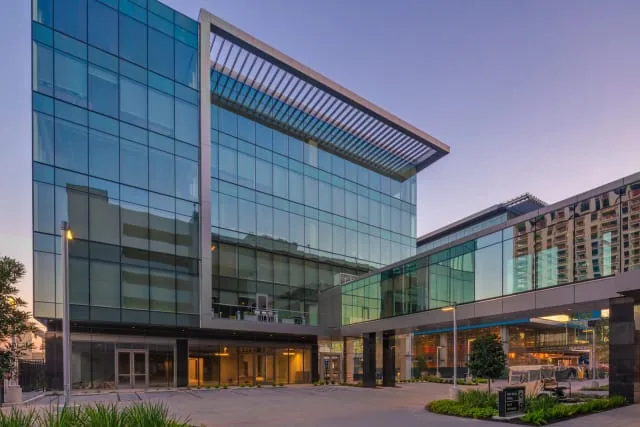
Moody Village Towers DST is a Delaware statutory trust, sponsored by Moody National, that offers accredited investors fractional, passive beneficial interests in a Class A office campus along the Katy Freeway in West Houston, Texas. The Trust was formed by Moody Village Towers Depositor, LLC under a trust agreement dated August 11, 2022, and is offering up to 136,250 Class A Beneficial Interests at $1,000 per Interest for a maximum equity raise of $136,250,000. The underlying real estate, referred to as the Project, comprises three buildings on two contiguous parcels totaling approximately 325,557 rentable square feet: Tower I, a six-story building of roughly 141,249 square feet; Tower II, a six-story building of roughly 141,059 square feet; and a single-story plaza building with an attached six-level parking garage providing approximately 1,364 parking spaces, along with a fitness center, conference facilities, and covered parking. The property sits at 9651 and 9655 Katy Freeway (Interstate 10) in the Memorial City / Hedwig Village submarket, one of Houston's most established office corridors, adjacent to Memorial City Mall, upscale lodging, and a deep base of retail and residential amenities. As of the offering, Tower I was approximately 97.8% occupied across nine tenants and the overall Project was roughly 94% leased, anchored by tenants such as EnCap Investments, Innovation Specialists (2ND.MD), SEP Permian, Moody National Realty Company, and Veritex Community Bank. The Trust has leased the Project to an affiliated Master Tenant under a long-term master lease and financed the acquisition with a $74,500,000 non-recourse, interest-only loan, producing conservative leverage of roughly 35 to 37 percent of the purchase price. The business plan is to own and operate the Project for approximately ten years, distribute cash flow to Holders, and then sell the asset. Structured to qualify as replacement property for Internal Revenue Code Section 1031 like-kind exchanges, the offering is designed for accredited 1031 exchangers and cash investors who want passive, income-oriented commercial real estate exposure without day-to-day management responsibility.
Highlights
Location is the offering's most durable strength. The Project fronts the Katy Freeway (Interstate 10) at 9651 and 9655 Katy Freeway in Houston's Memorial City / Hedwig Village submarket, one of West Houston's most established and amenity-rich office corridors. The immediate neighborhood includes Memorial City Mall with national retailers such as Target and Macy's, Hotel ZaZa Memorial City, the Westin Houston Memorial City, a Cinemark theater, and abundant dining and upscale residential density. The site benefits from direct access to a network of major roadways, including Interstates 10, 45, 69, and 610. According to the PPM, the surrounding submarket showed an occupancy rate of roughly 91% in the second quarter of 2022, and comparable Class A office space was leasing in the $30 to $37 per square foot range, with select retail frontage on I-10 expected to command up to $50 per square foot. This is a well-located, infill asset in a supply-constrained, high-visibility corridor with strong regional connectivity.
The Project is an institutional-quality office campus of approximately 325,557 rentable square feet across three buildings on two contiguous parcels: two six-story towers of roughly 141,249 and 141,059 square feet and a single-story plaza building topped by a six-level parking garage with approximately 1,364 spaces. Amenities include a fitness center, meeting and conference facilities, a mail room, and covered parking. At acquisition Tower I was approximately 97.8% occupied by nine tenants and the overall Project was roughly 94% leased. The rent roll is diversified across professional and energy-sector users, with Major Tenants representing approximately 63.7% of the Project in aggregate. Notable tenants include EnCap Investments (roughly 38,071 square feet), Innovation Specialists doing business as 2ND.MD (roughly 48,130 square feet), SEP Permian (roughly 26,384 square feet), Moody National Realty Company (roughly 25,373 square feet), and Veritex Community Bank (roughly 18,872 square feet). The in-place occupancy, structured parking, and amenity package position the campus to compete for quality tenants in the submarket.
The capital structure is conservatively leveraged. The Trust financed the acquisition with a single $74,500,000 loan against a gross offering basis of $210,750,000 (equity of $136,250,000 plus the loan), equating to a loan-to-purchase-price ratio of approximately 37.27% measured against the net purchase price of $199,901,945, or about 35.35% of the $210,750,000 gross price. The loan is non-recourse to Holders, carries a ten-year term with a SOFR-based rate, and is interest-only, so no principal amortizes before maturity. Because leverage is modest relative to typical DST offerings, the Project carries a lower debt burden and a larger equity cushion, which can reduce refinancing pressure and downside sensitivity to value declines. The Trust also funds reserves, including a tenant-improvement and leasing-commission allowance capped at $10,200,000, an operating reserve, and an additional annual reserve allocation, intended to support leasing costs and operations over the hold. The low leverage is a meaningful risk-mitigant for exchange investors focused on capital preservation.
The offering is sponsored by Moody National, a Houston-based real estate organization, through Moody National DST Sponsor, LLC, with Moody Village Towers Depositor, LLC as Depositor, Moody Village Towers AM, LLC as Trust Manager, and an affiliated Moody Village Towers Master Tenant entity operating the Project under the master lease. The sponsor group's local roots are relevant: its offices and an affiliate tenant, Moody National Realty Company, are located at the Project itself, giving the sponsor direct, on-the-ground familiarity with the asset and the West Houston market. The PPM discloses that certain principals of the Trust Manager have experience owning and operating an office building, which speaks to relevant operating capability. Investors should weigh this alongside the PPM's candid disclosure that the Trust and Trust Manager are newly formed entities created for this transaction, with no operating history of their own and limited capital, so execution depends heavily on the sponsor's broader platform, its affiliates, and third-party property management retained to run the campus day to day.
The offering is structured to serve investors completing a Section 1031 like-kind exchange. Because the Trust is a Delaware statutory trust intended to be treated as a grantor trust for tax purposes, a purchase of Interests is designed to qualify as a direct interest in real estate and therefore as valid replacement property, allowing an exchanger to defer capital gains tax on the sale of relinquished property. The minimum investment for a 1031 exchanger is 100 Interests ($100,000 of equity), while cash purchasers may invest a minimum of 25 Interests ($25,000). Holders receive their pro-rata share of net rental cash flow, and the structure passes through depreciation that can shelter a portion of distributions. The Trust's business plan contemplates owning the Project for approximately ten years and then selling it, at which point Holders may again pursue a Section 1031 exchange to continue deferring gain, or receive their share of net sale proceeds. Investors should note the PPM does not market a Section 721 UPREIT roll-up as the exit; deferral continuity depends on a future sale followed by another qualifying exchange, and on the structure maintaining its intended tax treatment.
Analysis of Moody Village Towers DST
Insights
Moody Village Towers DST fits a specific investor: a 1031 exchanger who wants passive, income-oriented Class A office exposure in a familiar Houston submarket and who prioritizes a strong balance sheet over aggressive yield. The defining feature is leverage. At roughly 35 to 37 percent loan-to-purchase price, this is a low-leverage DST, which materially reduces refinancing and downside risk relative to office deals financed at 50 to 60 percent, but also caps the upside that leverage can manufacture. The trade-off shows up in the projected distribution band of 4.50% rising toward 5.88% of invested capital, which is competitive for a lightly-levered office asset but should be read as after-debt-service cash flow that depends on maintaining occupancy near the underwritten mid-90s. The single most important thing to watch is leasing. Tower I was about 97.8% occupied and the overall Project roughly 94% leased at closing, but the office sector faces structural headwinds, and the PPM flags near-term rollover, most notably a large 2ND.MD block (26,507 square feet) expiring at the end of 2023 and several other Major Tenant leases maturing during the hold. Because Major Tenants represent about 63.7% of the Project and part of the roster is tied to Houston's energy sector, re-leasing velocity, tenant-improvement spending against the $10,200,000 allowance, and concession levels will drive whether actual distributions track the projections. The second thing to weigh is price versus value: the $210,750,000 offering basis sits above the $184,700,000 September 2022 appraisal and the sponsor's approximately $184,000,000 acquisition cost, so investors are paying a load-and-markup spread of roughly 12 to 14 percent over current value. For a 1031 investor, that premium is often the accepted cost of tax deferral and passivity, but it raises the exit bar: the Project must appreciate through the hold simply for investors to recover their basis, which makes the eventual exit cap rate and the interest-rate environment at the roughly ten-year sale the key swing factors for total return. On structure, the low leverage, funded reserves, and master-lease arrangement are genuine risk-mitigants, but the offsets are real: no control, illiquidity, an affiliated Master Tenant and related-party tenants, a newly-formed manager with no DST operating history, an interest-only balloon at maturity, and a business plan whose success is tied to a single office campus. Note also that the offering relies on a sale-and-reinvest exit rather than a Section 721 UPREIT option, so continued deferral depends on a future qualifying exchange. On balance, this is best suited to a conservative exchanger who values capital preservation, low debt, and a stabilized, well-located asset, and who is comfortable underwriting Houston office fundamentals and the pricing premium in exchange for tax deferral and a fully passive hold.
Advantages
Conservative leverage: the $74,500,000 non-recourse, interest-only loan represents only about 35 to 37 percent of the purchase price, giving the offering a large equity cushion and lower refinancing sensitivity than many DSTs. Established infill location: the campus fronts Interstate 10 in the Memorial City / Hedwig Village submarket of West Houston, a well-known, amenity-dense office corridor with strong regional connectivity and roughly 91% submarket occupancy at underwriting. Meaningful in-place occupancy: Tower I was about 97.8% leased across nine tenants and the overall Project roughly 94% leased, providing current income rather than a lease-up gamble. Diversified, recognizable rent roll: Major Tenants make up about 63.7% of the Project, including EnCap Investments, 2ND.MD, SEP Permian, Moody National Realty Company, and Veritex Community Bank. Defined, income-first business plan: the Trust targets distributions beginning at 4.50% and ranging up to 5.88% of invested capital over an approximately ten-year hold, paid after debt service and expenses, with a master-lease structure and funded reserves (including up to $10,200,000 for tenant improvements and leasing commissions) intended to smooth cash flow. Local sponsor alignment: Moody National is Houston-based and occupies space in the Project through an affiliate, giving it direct market and asset familiarity. Exchange-friendly access: a $100,000 minimum for 1031 exchangers ($25,000 for cash investors) makes fractional, fully passive Class A office ownership available to accredited investors seeking tax-deferral and truly hands-off management.
Concerns
Illiquidity: there is no public market for the Interests, transfers are restricted, and investors should expect to hold for the full roughly ten-year term. No control: Holders have no say in day-to-day operations, leasing, financing, or the timing of a sale, and the DST 'seven deadly sins' restrictions bar the Trust from renegotiating the loan, raising new capital, or reinvesting sale proceeds, which limits flexibility if conditions change. Single-asset, single-sector concentration: the investment is one office campus in one Houston submarket, with no property, geographic, or asset-class diversification, and meaningful exposure to Houston's energy economy through tenants such as EnCap and SEP Permian. New venture: the PPM states the Trust and Trust Manager are newly formed with no operating history, limited assets and capital, and no experience managing a DST. Reliance on affiliates: cash flow depends on an affiliated Master Tenant paying rent, and conflicts of interest exist because Moody National Realty is a tenant and the lender, Veritex Community Bank, is also a tenant. Interest-only balloon risk: the loan amortizes no principal, so the full $74,500,000 is due at maturity, creating refinancing or forced-sale risk if the Project is not sold as planned. Load / pricing: the $210,750,000 offering basis exceeds the Project's September 2022 appraised value of $184,700,000 and the sponsor's roughly $184,000,000 acquisition cost, and offering costs include about $10,900,000 in selling commissions plus organization, closing, and loan expenses, so investors pay a premium over current asset value. Lease rollover: several Major Tenant leases roll during the hold, including a large 2ND.MD block expiring December 31, 2023, exposing the Project to releasing costs, concessions, and downtime. Rate and tax risk: rising interest rates could push cap rates up and values down, and the intended 1031 tax treatment relies on a tax certificate and continued structural compliance, with distributions potentially supported in part by reserves rather than operations.
Moody Village Towers DST — Complete Offering Data
Offering & Structure
Investment NameMoody Village Towers DST
SponsorMoody National
StructureDelaware Statutory Trust (DST)
Offering Type506(c)
StatusConfirm Availability
Last Updated2026-08-03
Size & Availability
Total Offering$210,750,000
Equity$136,250,000
Debt$74,500,000
Available Equity$53,000,000 (38.9% of equity)
Minimum Investment$100,000
Total Load11.67%
Initial Reserves7.96%
Property
Property TypeOffice
StrategyCore
LocationTX
Market TierTier 1
Income & Projections
Average Yield6.24%
Projected Yields (Y1–Y10)Y1 6.33% · Y2 6.33% · Y3 6.33% · Y4 6.33% · Y5 6.33% · Y6 6.33% · Y7 6.76% · Y8 5.88% · Y9 5.88% · Y10 5.88%
Tax-Adjusted Yield13.17%
Cap Rate Equivalent9.28%
Year 1 NOI$9,560,315
Y1 Payout Ratio0.67
Financing
In-Place LTV35.35% LTV
LenderVeritex Community Bank and American National Bank of Texas
Loan TypeVariable-Capped
Interest Rate5.09% (Fixed)
Loan Term10 years
I/O Period10 years
AmortizationN/A
Y1 DSCR2.49x
Exit
Estimated Hold Period10 years
721 Exchange ExitNone
Benchmarks (vs sector median)
Avg. Income6.24% vs 3.09% market — Above Average
Growth6.91% vs 27.04% market — Below Average
Peak6.76% vs 3.64% market — Above Average
Every data point Baker 1031 tracks for this offering, in one place. Figures are drawn from the offering’s private placement memorandum and sponsor materials unless noted, are summaries for convenience only, and are qualified in their entirety by the PPM. Tap the ⓘ icon next to any label for what it means and how it is calculated.