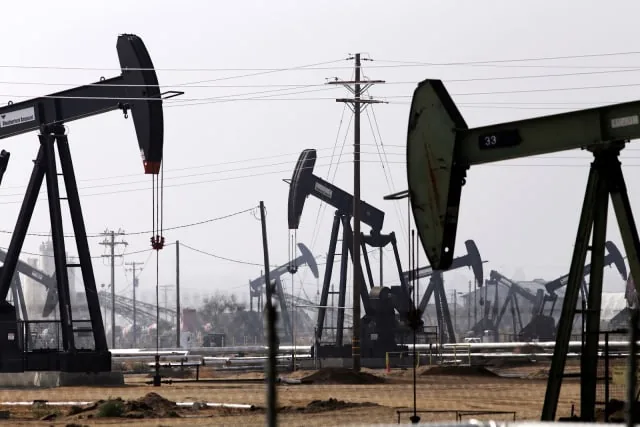
Resource Royalty 27, LLC Overview
Resource Royalty 27, LLC offers undivided, direct-title non-possessory mineral and royalty interests across a 12-property, two-state portfolio aggregating 552.99 net royalty acres and 16,724 gross acres. The asset base concentrates in two premier basins: eight Oklahoma properties span the Anadarko complex (STACK gas window in Custer/Dewey, SCOOP/Merge in Grady, Western Anadarko oil window in Ellis/Canadian), while four Texas properties sit in the northern Permian (Borden and Dawson counties). Operatorship is held by established, well-capitalized E&P names: Surge Operating, SM Energy, Devon/Coterra, Validus Energy, Mewbourne Oil, and Camino Natural Resources, insulating royalty holders from drilling capex, lease operating expense, and plugging/abandonment liability. The thesis is current-income-led: sixteen wells are in pay status as of the March 1, 2026 effective date, with the cash-flow base supplemented by 41 proven undeveloped locations, four drilled-uncompleted wells, and multiple permitted/filed locations providing non-cost-bearing development optionality. As non-operating royalty interests, holders capture gross wellhead revenue free of operating cost, with a stated ~35-year remaining reserve life and quarterly distributions administered by Resource Royalty Property Management, LLC.
Highlights
The portfolio's revenue is underwritten by a roster of institutionally-capitalized operators rather than a single counterparty, materially diversifying drilling-pace and completion-timing risk. Surge Operating, SM Energy, Devon/Coterra, Validus, Mewbourne, and Camino each carry the full burden of drilling, completion, lease operating expense, and abandonment obligations, while the royalty interest sits at the top of the revenue waterfall, paid off gross production before operating deductions. This non-cost-bearing posture structurally eliminates the margin compression that erodes working-interest returns when service costs inflate or commodity prices soften.
Geographic positioning in the northern Permian core (Borden/Dawson) and the multi-bench Anadarko complex provides exposure to two of the lowest-breakeven onshore U.S. resource plays. Several units sit in stacked-pay configurations: the Bennett property in the SCOOP play and the Wendigo unit in the Permian carry multiple producing horizons, amplifying recoverable reserves per royalty acre and extending the reinvestment runway as operators down-space and develop secondary benches over the hold.
Beyond the 16 wells currently in pay, the portfolio carries a substantial undrilled inventory: 41 proven undeveloped locations, four drilled-but-uncompleted wells, one permitted and four filed new-drill locations, representing latent production growth the royalty holder captures without contributing development capital. The Merganser unit's recent completions, which came online ahead of schedule and above type-curve expectations, evidence near-term conversion of this inventory into incremental cash flow.
The direct-title deed structure differentiates this offering from pooled fractional vehicles: each investor receives recorded mineral and royalty deeds to undivided interests rather than a beneficial interest in a trust, preserving individual control over holding period and disposition timing. Coupled with a secured tax opinion treating the royalties as real property eligible for Section 1031 exchange, the structure accommodates like-kind replacement-property needs while avoiding the co-ownership lock-in inherent to DST and TIC programs.
A 15% statutory depletion allowance shelters a meaningful portion of distributed royalty income, enhancing after-tax yield relative to fully-taxable income streams, while the ~35-year estimated reserve life supports an extended distribution horizon decoupled from any forced disposition date. The quarterly distribution cadence, aggregated from monthly operator remittances and net of a 1% annual management fee, provides a recurring income profile suited to exchange investors prioritizing durable cash yield over terminal-value realization.
Analysis of Resource Royalty 27, LLC
Insights
Read correctly, Resource Royalty 27 is not a real estate replacement but a tax-advantaged, real-property-classified energy-income allocation — an unlevered royalty strip paying current cash off the top of the production waterfall, its return variance resting on commodity prices and operator cadence, not financing. The 9.60% average five-year cash-on-cash looks rich against stabilized core real estate, but against its own peer set the pricing is unremarkable: average income, peak yield, and growth all Meet — not beat — the oil & gas royalty benchmark (9.6% income, 10% peak), so the premium over core real estate is compensation for uncovered commodity beta, not a yield edge. What warrants scrutiny is the 15% total load, heavy by any standard: roughly fifteen cents of every committed dollar goes to fees, commissions, and sponsor spread, so the headline yield is struck on capital already carrying a material frictional haircut, and the effective entry economics on the underlying royalty are less generous than the run-rate implies. The single variable the outcome hinges on is price: the Base Range assumes flat $59–60 oil and $3.00 gas, but the Low Range sensitivity ($22 oil, $1.50 gas) collapses the five-year cumulative return from 48% to roughly 13% — a ~73% impairment — and with no debt there is likewise no hedge, so a soft-price cycle flows straight to the distribution. Debt-free is the genuine structural virtue, fully insulating the payout from the refinancing and rate-cap pressure on leveraged 1031 real estate, yet doing nothing to insulate it from a $40 oil print. The 8% Year-1 figure is a partial-year 2026 ramp, not a coverage shortfall, scaling to a 10% run-rate that depends on operators actually converting the 41-PUD / 4-DUC inventory — allocation decisions the royalty holder cannot compel. This fits an exchange investor who has met their leverage and core-real-estate needs elsewhere, wants a depletion-sheltered income sleeve with no forced disposition date, and can underwrite oil-price risk with eyes open. It is the wrong home for capital that needs principal stability, a predictable exit, or a low cost basis — or for anyone unwilling to accept that a 15% load stacked on unhedged commodity exposure is the true price of the yield.
Advantages
The principal strength is the cost-free, top-of-waterfall royalty position across a diversified, multi-operator, multi-basin portfolio anchored by 16 producing wells and a deep undeveloped inventory, delivering current income (8% partial-year in 2026 scaling to a 10% run-rate) without exposure to drilling capex, LOE, or abandonment liability. The debt-free capital structure eliminates refinancing, rate-cap, and maturity-wall risk entirely, removing the leverage-driven distribution volatility characteristic of financed real estate. Operator quality is high, with publicly-traded and well-capitalized E&P counterparties actively drilling the acreage, and the development pipeline (41 PUDs, 4 DUCs, permitted/filed locations) offers organic upside captured at zero incremental cost. The Section 1031 real-property tax opinion, 15% depletion shelter, and direct-title deed structure together provide a tax-efficient, investor-controlled vehicle with a ~35-year reserve life and no mandated disposition timeline.
Concerns
The dominant asset-specific vulnerability is commodity-price beta: the underwriting Base Range assumes flat $59-60 oil and $3.00 gas, and the Low Range sensitivity, at $22 oil and $1.50 gas, compresses the five-year cumulative return from 48% to 13.07%, a roughly 73% impairment of forecast cash flow with no debt-service buffer or hedging program to dampen the move. Distribution durability is exposed to operator discretion: operators are under no obligation to drill, complete, or maintain production, and conversion of the 41 PUD and 4 DUC locations into cash flow depends entirely on third-party capital-allocation decisions. The Low Range case explicitly assumes a static well count in 2029-2030 with no new drilling, underscoring that the 10% run-rate is contingent on continued development that may not materialize at depressed prices. Concentration risk is non-trivial: 552.99 net royalty acres across only 12 properties and seven counties means single-unit underperformance carries disproportionate weight, and royalty interests decline on a hyperbolic depletion curve, requiring ongoing operator reinvestment simply to sustain the headline yield. The 95%/5% structure further leaves investors bearing proportional financial responsibility for the carried 5% interest.
Resource Royalty 27, LLC — Complete Offering Data
Offering & Structure
Investment NameResource Royalty 27, LLC
SponsorResource Royalty
StructureDirect-Title Mineral & Royalty Interests
StatusClosed
Last Updated2026-07-17
Size & Availability
Total Offering$6,124,950
Equity$6,124,950
DebtAll-Cash
Available Equity$0 (0% of equity)
Minimum Investment$100,000
Total Load15.00%
Property
Property TypeOil & Gas
StrategyCore-Plus
LocationOK, TX
Income & Projections
Average Yield9.60%
Projected Yields (Y1–Y10)Y1 8.00% · Y2 10.00% · Y3 10.00% · Y4 10.00% · Y5 10.00%
Tax-Adjusted Yield14.84%
Cap Rate Equivalent10.66%
Financing
In-Place LTV0.00% LTV
Exit
Estimated Hold Period5 years
721 Exchange ExitNone
Benchmarks (vs sector median)
Avg. Income9.60% vs 9.60% market — Meets Average
Growth25.00% vs 25.00% market — Meets Average
Peak10.00% vs 10.00% market — Meets Average
Every data point Baker 1031 tracks for this offering, in one place. Figures are drawn from the offering’s private placement memorandum and sponsor materials unless noted, are summaries for convenience only, and are qualified in their entirety by the PPM. Tap the ⓘ icon next to any label for what it means and how it is calculated.